


The Psychology of Anti-Aging: Why Mindset Affects Metabolism
Your mindset might be influencing your metabolism more than you think. While age and lifestyle get all the attention, this post dives into the often-overlooked link between mental state and metabolic health.

From Survival to Self-Actualization
Most people believe survival mode is something you exit once life stabilizes. That is rarely how it works.
Survival mode is not only a response to crisis. It is a state that can quietly become an identity—especially among high-functioning adults who learned early that endurance, self-reliance, and output were the price of safety.
For many, survival does not end when danger passes. It becomes the strategy.
This is not a failure of insight. It is a failure of transition.

Digital Intimacy and Emotional Atrophy
Something has shifted in how people connect, and I have been watching for long enough that I don’t think the trend will self correct. We are experiencing a modern over intellectualization without nervous stem capacity. Patients come in more articulate about their inner lives than any generation I have worked with. They can name their attachment styles, identify their triggers, describe the shape of their anxiety with precision. And yet the relationships they bring into session are thinner than they should be — less durable, less regulated, quicker to collapse when something uncomfortable surfaces. The emotional vocabulary is there. What seems to be weakening is the capacity to use it in the presence of another person or utilize it toward execution.

Survival Mode Is Not a Strategy: Executive Stress, Aging, and the Cost of Constant Evolution
Modern executive culture rewards relentless motion, continuous optimization, and unyielding availability. While such traits once symbolized strength, mounting evidence suggests that chronic survival-mode functioning exacts a profound biological and psychological toll. This paper examines executive stress through the lens of neurobiology, aging, leadership evolution, and modern economic pressure. Drawing on peer-reviewed research, real-world executive outcomes, and lived leadership experience, it argues that sustained hypervigilance accelerates physiological aging, undermines cognitive flexibility, and paradoxically impairs innovation. Survival mode may preserve relevance in the short term—but it is incompatible with longevity, sustainable leadership, or human vitality.

The Myth of Either/Or: You Do Not Have to Choose Between Success and Family
What I encounter consistently, across years of clinical practice, is a version of the same conversation. A high-functioning adult reaches their mid-30s — productive, driven, succeeding by most visible measures — and arrives carrying a question they have come to believe has only two answers.
“Do I choose success or do I choose family?”
Most people who carry this framing have never really interrogated it. It arrives already feeling like a fact — not a set of inherited assumptions, but simply the way things are. Looking back across these conversations, the conflict almost never originates where people think it does. It’s rrarely personal. It is, in most cases, structural: a set of beliefs about how ambition and presence relate to each other, passed from one generation of professional life to the next.

Why Waiting Until 50 Is Too Late: The Myth of Starting Hormones Later
“It is never too late to start.”
I hear that often — and in many contexts, it holds. The capacity to change direction, rebuild something, or take on something genuinely new late in life is real. But when it comes to hormonal biology, the phrase needs qualifying. Clinically, the picture is more complicated.
I have seen people in their 50s who carry their age lightly — energetic, focused, physically capable. And I have seen people the same age who move and function as though they are a decade and a half older. In most of the cases I would point to, what separated them was when they started paying attention to what their physiology was signaling — and whether they did anything about it before the window closed.

Executive Burnout 2.0: When Survival Mode Becomes the Strategy
As 2026 opens, many leaders are quietly exhausted—not from failure, but from endurance.
The past year demanded constant adaptation. Margins tightened. Inflation reshaped labor and lending. Capital became harder to access. Deals slowed. Even well-run organizations found themselves working harder simply to maintain position. Conversations with fellow executives—across industries, boardrooms, and alumni circles—echo the same refrain: we are expending more energy than ever just to stay in place.
This is not a personal weakness. It is a structural reality. Yet the biological cost of sustaining this level of vigilance remains largely unspoken.

Hormones, Behavior, and the Human Spirit
We have spent decades giving hormonal decline a name that sounds neutral, almost comforting in how inevitable it feels. Aging, we call it. Our parents dealt with it—chin up, belt tightened, fewer complaints. We watched them do it and decided that must be how things work. Losing your vitality, your desire, your softness, the ease you once took for granted—we dressed that up as maturity. It is not maturity. It is a physiological failure, and almost no one calls it what it is. But look at it honestly and the framing falls apart. Hormones are not some luxury reserved for the young. They are not cosmetic extras tacked onto an otherwise working system. What they actually are—and what we keep refusing to acknowledge—is the biological infrastructure that makes psychological life possible at all. Behavior shifts when hormones decline. The human spirit contracts when they vanish. And every time we normalize that contraction, we confuse deprivation with fate.

The Identity Reboot: Who Are You Without Your Title?
For high achievers, identity and accomplishment often become indistinguishable. The title, the company, the success—they don’t just represent the person; they replace them. The Identity Reboot explores what happens when achievement becomes self-definition and examines the psychological, neurological, and existential consequences of losing one’s professional identity. Using research in self-concept, neuroplasticity, and motivation theory, this paper reframes identity not as a fixed status but as a dynamic system—one that can be rewritten, reconnected, and restored without the need for constant external validation
Cortisol, Chaos, and Control
There is a phase in high achievement that rarely gets named because it is so often rewarded. Life becomes extremely organized. Wake times are exact. Training is non-negotiable. Work, parenting, nutrition, and even rest are engineered to reduce friction. The system runs cleanly, efficiently, almost beautifully. From the outside, it looks like discipline. From the inside, it feels necessary.
I remember this phase clearly after my divorce. I woke every morning at four without an alarm, trained hard, worked relentlessly, and tolerated very little deviation. On one of the first dates I went on during that period, the man across from me noticed it immediately. He said I seemed finely tuned, almost over-calibrated—like a machine that performed optimally as long as nothing disrupted it. He told me it reminded him of his early business-building years, when even a missed workout, a poor night of sleep, or an unexpected obligation would throw him off for days.

The Meaning Crisis: Why Modern Success Leaves the Soul Hungry
Modern success has outpaced meaning. We’ve built lives optimized for achievement yet impoverished in depth. This paper examines how ambition, overstimulation, and external validation distort fulfillment—and how neuroscience, Vedanta, and behavioral science together illuminate the path back to internal coherence. The question is no longer How do we succeed? but Why—and for whom—do we keep running?
Recovery Is Strategy: Redefining Rest as a Performance Multiplier
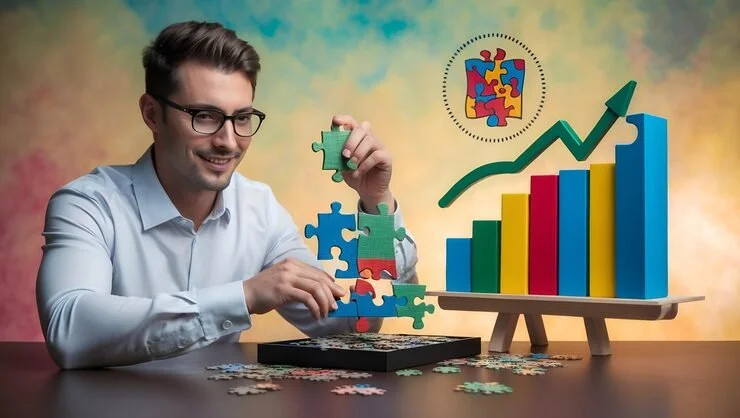
In high-performance culture, recovery is often treated as a reward for effort. In reality, it is the source of effort. This paper explores the neuroscience of recovery as a biological reset for focus, hormonal regulation, and emotional resilience—and argues that the most sustainable leaders are those who rest not as escape, but as strategy. Optimization isn’t about doing more; it’s about knowing when to stop.

Reclaiming Polarity: The Neuroscience of Attraction, Energy, and Emotional Equilibrium
Modern society celebrates equality but confuses it with sameness. In denying the natural polarity between masculine and feminine energy, we’ve flattened attraction, blurred leadership identity, and weakened emotional regulation. This essay explores the neurobiology of masculine and feminine dynamics, the hormonal roots of attraction, and why returning to biological truth—without ideology or exclusion—is the path to restoring balance and vitality.

Algorithmic Identity: How Technology Rewired Our Sense of Self
This is no longer about dopamine. It’s about definition. We’ve evolved from responding to technology to being shaped by it—our attention, ambition, and even our sense of existence now run on feedback loops designed for engagement, not fulfillment. We’re not Pavlov’s dogs reacting to the bell. We’re Pavlov, the bell, and the dog—all at once—training ourselves to equate stimulation with significance.

The Feminine Burnout: Why Women Are Leading and Leaving at the Same Time
Women are advancing in leadership faster than ever—yet leaving it in record numbers. The same psychological traits and hormonal systems that fuel female excellence also make women more vulnerable to exhaustion, empathy fatigue, and hormonal dysregulation. This essay examines the neuroscience of feminine burnout, the cultural architecture that sustains it, and how modern science, self-awareness, and regenerative medicine can help women lead without losing themselves.

The High-Performer’s Dilemma: Ambition vs. Emotional Regulation
Ambition is the engine of achievement—but unmanaged, it becomes the architecture of exhaustion. This essay explores how the neurobiology of success overlaps with addiction, how chronic stimulation alters hormonal balance, and how emotional regulation becomes the new marker of elite performance.
The Longevity Mindset: How to Live Younger, Longer
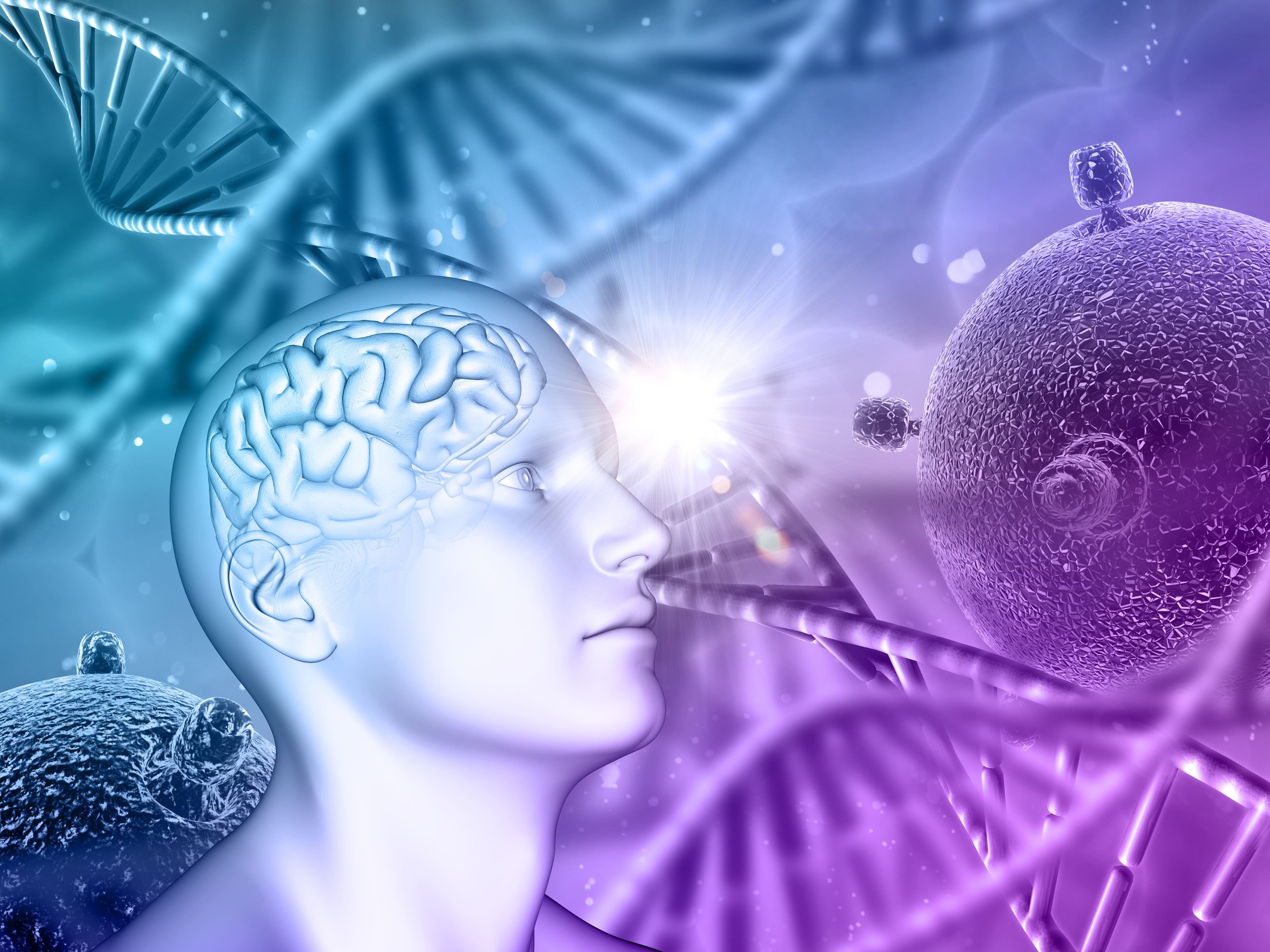
Longevity is not only biological—it is psychological. While advances in peptides, hormones, and regenerative medicine extend lifespan, mindset determines how those years are lived. The Longevity Mindset reframes aging as optimization rather than decline, integrating neurobiology, behavioral science, and purpose-driven living. It explores how the brain interprets age, how belief and biochemistry interact, and how aligning purpose, identity, and physiology adds not just years to life—but vitality to those years

The Resilience Blueprint: Why Emotional Recovery Is the New Marker of Strength
Resilience has long been defined as toughness—the ability to endure pressure and persist despite pain. But modern neuroscience reveals that true resilience isn’t about endurance; it’s about recovery. This essay examines the neurobiology of stress, the emotional mechanisms of repair, and how redefining resilience as flexibility rather than fortitude protects mental health, longevity, and leadership capacity.

Building Mental Health Wealth: The New Frontier for Investors and Founders
Success isn't just built on strategy, it’s sustained by mental clarity. This article explores why more founders and investors are prioritizing their mental health and how building "mental health wealth" is becoming essential for sustainable growth and decision-making at the top.

The Death of Hustle Culture and the Rise of Conscious Success
A pattern I keep encountering, in the clinic and in business, is accomplished people arriving depleted in a way a long weekend does not touch. Mid-career, often successful by most visible measures, usually proud of what they have built. The exhaustion is structural, woven into how they have been operating for years, and the thread running through nearly all of them is a belief system that equates harder with more. Most never consciously chose it. It was simply the water they swam in.